Why employers matter in apprenticeship success
Why employers matter in apprenticeship success
In the first of a new series of articles, Samarah Dawson, Business Development Manager at specialist furniture and interiors apprenticeship training provider, WEBS Training, aims to break down some of the mystery around apprenticeships for employers, so they can make the right choices for their business, and so that apprenticeships can seem a bit more accessible.
Everyone seems to be talking about apprenticeships – the answer to skills gaps, the answer to the youth unemployment crisis, the alternative to university… but how does it all work? Where do the apprenticeships come from? Are they actually worth it?
Where to start?
First and foremost, an apprentice is an employee. They have employment rights and responsibilities, a contract of employment, and are paid a salary. A business of any size can take on an apprentice – even a sole trader, they just need to set up PAYE.
Apprenticeships are only available if an employer says that they will take on an apprentice.
They don’t have to find the apprentice (more on this later), this can be advertised as an apprenticeship vacancy.
And this is where the idea of apprenticeships being the solution to everything begins to unravel – if lots of businesses don’t choose to have an apprentice, then there are very limited opportunities with high application rates.
We cannot be engaging school leavers about apprenticeships without first engaging the employers who can actually make apprenticeships happen.
Along with being employed, the apprentice will be working towards an apprenticeship standard – this is the training and learning side of the apprenticeship.
The standard is split into the practical learning period, and gateway period – gateway is where the apprentice will prepare for their end point assessment, where if they pass they will have achieved that apprenticeship standard.
There are hundreds of standards for all sectors at different levels – some of these standards have skills that overlap, and honestly, some of the titles are not the most obvious!
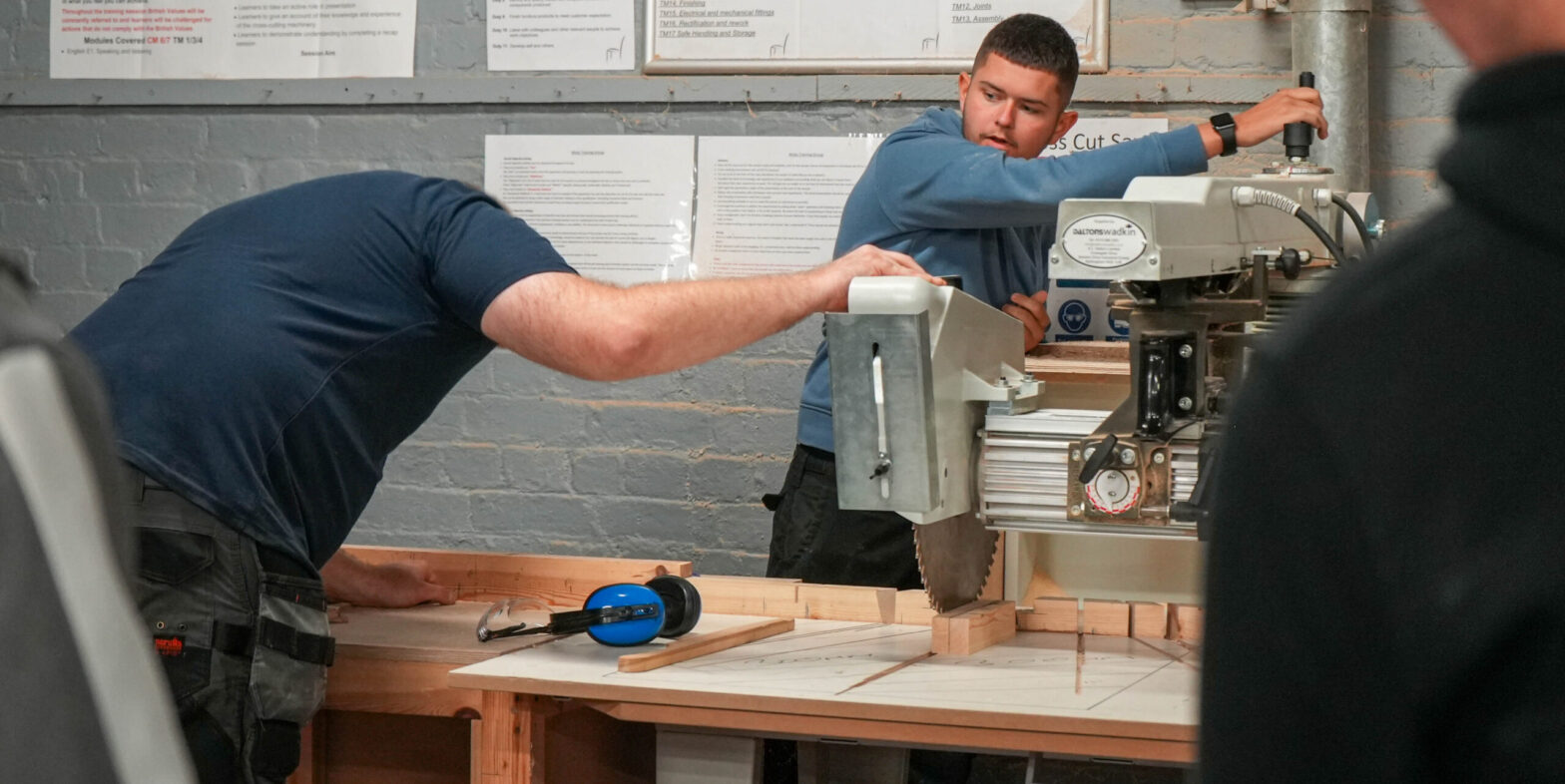
For example, joinery. There is only one apprenticeship that specifically mentions joinery in the title, however there are several additional apprenticeships for timber trades that can cover machining, component creation, and assembly – arguably joinery by another name!
These include Furniture Making Operative, Wood Machinist, Wood Product Manufacturing Operative, Bespoke Furniture Maker etc…
Each standard will have various training providers that are able to provide the training and education part of the apprenticeship.
The training provider is responsible for providing education and training, and ensuring paperwork is where it needs to be for the assessment at the end of the course.
But the training provider cannot do it alone – the training time is only 20% of the course – the rest is down to the employer also offering training and allowing the apprentice to practice their skills.
Finding the right training provider for your business is important for apprentice success. It is important before committing to a training provider to talk to them about what you need, ask them to go through the standard with you, and exactly what you need.
Samarah will be back next issue to talk about funding and costs of an apprenticeship.
For more information about WEBS Training, visit: Apprenticeships Nottingham – Webs Training
More news

Donaldson Timber Systems Partners with HebHomes
TJN’s Andy Ball’s day out supporting Lignum members