A Return to Timber Joinery?
A Return to Timber Joinery?
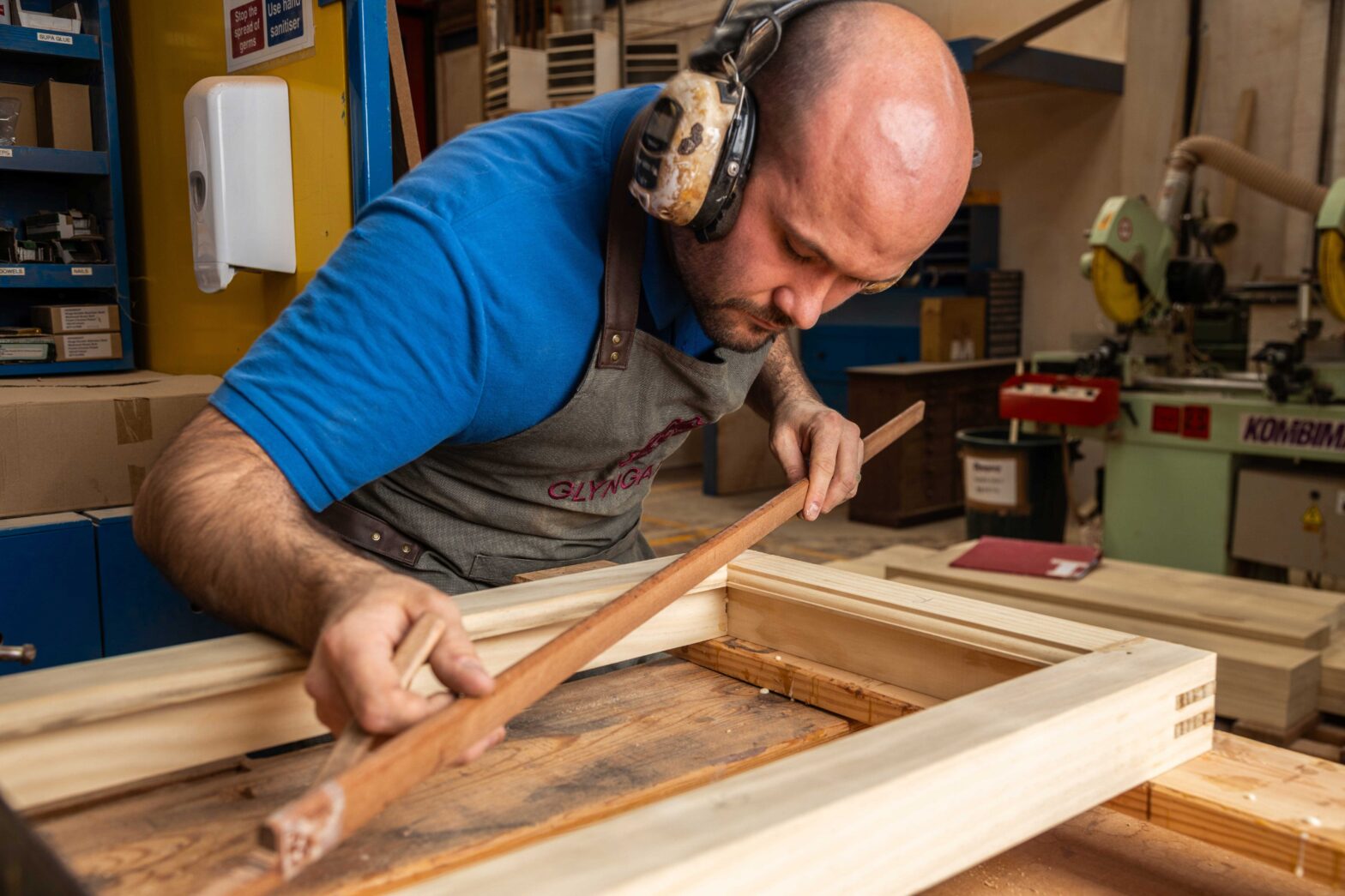
Joe Trueman, Director at Glyngary Joinery, discusses how high-end property developers are turning back to timber joinery, and more importantly, why.
In recent months, I’ve noticed a subtle yet compelling shift among high-end property developers – a quiet pivot back to timber joinery. It’s a trend not loudly announced in marketing brochures, but unmistakably present.
As someone who’s at the heart of timber craftsmanship, I’d like to share what’s really driving this resurgence – and why it matters to premium development today.
Heritage and authenticity at the core
When you’re working on a property with architectural pedigree – whether it’s a Grade II*-listed Georgian townhouse or a carved oak entrance in a new-build luxury home – replicating the genuine material quality matters. Timber delivers that authenticity in a way aluminium or PVC-U simply cannot. It brings a tactile warmth, characterful grain, and timeless refinement that resonates with customers looking for substance, not just style.
This isn’t hypothetical. Bespoke joinery firms like Stuart Interiors report commissions for period-inspired grand staircases, oak-panelled libraries, even restoring furniture for Historic Royal Palaces – often combining centuries-old joinery techniques with modern functionality. It’s proof that heritage craftsmanship still remains a differentiator.
Longevity: Built to last, not replace
Premium developers understand that quality backs prestige. Timber joinery from Glyngary, crafted with Accoya, offers lifespans of 60+ years – far longer than the 15–20 years typical of PVC-U frames. That longevity delivers real value, avoiding repeated replacement and enhancing lifecycle cost efficiency.
Moreover, timber stores carbon throughout its long life – an embedded sustainability benefit often overlooked in traditional joinery. Unlike synthetic alternatives, it becomes more than an aesthetic choice, it becomes an investment in the building’s environmental legacy.
ESG: From buzzword to boardroom principle
Environmental, Social, and Governance (ESG) themes have found their way from corporate presentations right into developers’ material specifications. Timber’s low embodied carbon, renewability, and recyclability make it an obvious front-runner – especially when carbon efficiency is as important as upfront cost in development forecasts.
Government policy is offering further tailwind. The UK’s Timber in Construction Roadmap 2025 positions sustainable timber use as essential for achieving net-zero targets – supporting both housing delivery and green jobs.
Similarly, more than 30 percent of top UK homebuilders now operate timber frame factories, signifying a systemic shift towards timber-based systems.
Projects like London’s Paradise SE11 – the UK’s lowest-carbon mass-timber office – demonstrate timber’s appeal among developers committed to ESG, delivering both aesthetic distinction and CO₂ savings equivalent to building 24 homes.
Design flexibility, thermal performance, and value
High-end developments demand both beauty and performance. Modern engineered timber frames – especially when paired with double or triple glazing – achieve stunning U-values. Glyngary’s double-glazed Accoya frames hit 1.2 W/m²K, while triple glazed drop to 0.68 W/m²K, outperforming building regulations by 50 percent or more.
Timber is also bespoke by nature. Whether it’s slender flush casements or ornate paneled doors, developers value the ability to customise – minimising compromises between design integrity and thermal efficiency. High-performance timber effortlessly crosses the bridge between visual excellence and energy performance.
Quiet momentum turning into mainstream
Timber isn’t yet universal – but among top-tier developers, it’s gaining momentum. Historical data shows that even as far back as 2014, the timber window market in housing outpaced the overall sector – with growth in both unit volume and installed value.
Now, with ESG, heritage, and regulation converging, the premium joinery niche is expanding. Those who invest early position themselves ahead of both market demand and regulatory shifts.
Final thoughts from the workshop
From where I sit, this isn’t nostalgia – it’s evolution. High-end developers are quietly returning to timber joinery not because it’s old-fashioned, but because it delivers on every tier – authentic craftsmanship, long-term value, environmental performance, and unmistakable elegance. At Glyngary, that’s where our passion lies – making timber not just beautiful, but compellingly sensible.
To find out more, go to www.glyngaryjoinery.co.uk
More news
TJN Members Day puts timber’s future in focus

Shortlist for 18th BWF Awards revealed