The Disappearance of Traditional Joinery
The Disappearance of Traditional Joinery
Amy Boutle, Marketing Manager of Gowercroft Joinery, discusses traditional skills within the joinery sector and whether it is becoming a thing of the past, and more importantly, should it be?

The decline of traditional joinery skills isn’t coming. It is already here.
What tradition really means
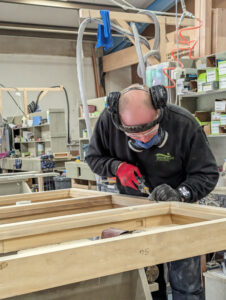
Tradition is often misunderstood. It isn’t about chiselling by candlelight or insisting on tools that belonged in a Georgian workshop. Nor is it about blindly repeating joinery specifications from 200 years ago.
And it certainly isn’t dust filled workshops and a blatant disregard for the health and safety practices that have developed in modern times.
Tradition is a deep level of understanding: How to use tools, materials and techniques but when to employ them and why. How to adapt processes and designs for modern needs and performance. It is respect for proportion and accuracy and the ability to make it just so. And how to make products of a high quality, that do what they are supposed to do.
It evolves: machines, coatings and glazing technology can all enhance what we do. But tradition is the thread that ensures the craft stays recognisable, reliable, and valuable.
Why skills are disappearing
It started with cost. Cheaper labour abroad meant higher profits at home, so businesses moved production overseas. As a result, the import of parts and components into the UK has more than doubled since the mid-1990s and the skills went with it. In fact, two-thirds of firms admitted lower wages were the main reason for outsourcing.
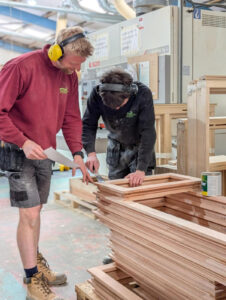 Training followed the same path: It costs money. It takes supervision. It means college days, paperwork, and patience. When margins are tight, many firms choose to hire someone already trained rather than grow talent themselves. Employer spending on training is down 10% in a single year and nearly 30% per employee since 2011.
Why machinery is not enough
Modern machinery has transformed joinery. It brings sharper accuracy, faster scalability, and possibilities that would have been unthinkable a generation ago.
But it cannot replace the people. Craftspeople are the quality control. They notice the dints, the nicks, and the inaccuracies by eye. They are the problem solvers when a conservation project throws up conditions no machine could predict. And they are the ones with the knowledge to operate that machinery in the first place.
Without that human insight, machines deliver volume without quality.
The choice ahead

Heritage buildings, in particular, demand authentic craft. They cannot be repaired or retrofitted properly without people who understand tradition – not just the look of it, but the reasoning behind every joint and every detail.
Tradition evolves, but without people it disappears.
And when it disappears, so does the knowledge needed to safeguard our buildings, our heritage, and our future.
And in a political climate increasingly sceptical of immigration, we cannot assume skilled people will come from elsewhere. We need to develop them here.
At Gowercroft Joinery, we know the answer lies in people. We are proud members of the 5% Club, yet we far exceed that benchmark with over 15% of our workforce in training.
Apprentices are valued highly here and trained well. Many have gone on to win awards and, with our promote-from-within ethos, now occupy senior positions. Training does not end at entry level either. Members of our team are progressing through supervisor and management development, with apprenticeships running right up to Level 6.
Investing in skills is, for us, far more effective than bemoaning their absence. It is how we are keeping tradition alive and ensuring the craft that built our heritage can continue to protect its future.
More news

TJN Members Day puts timber’s future in focus

Shortlist for 18th BWF Awards revealed