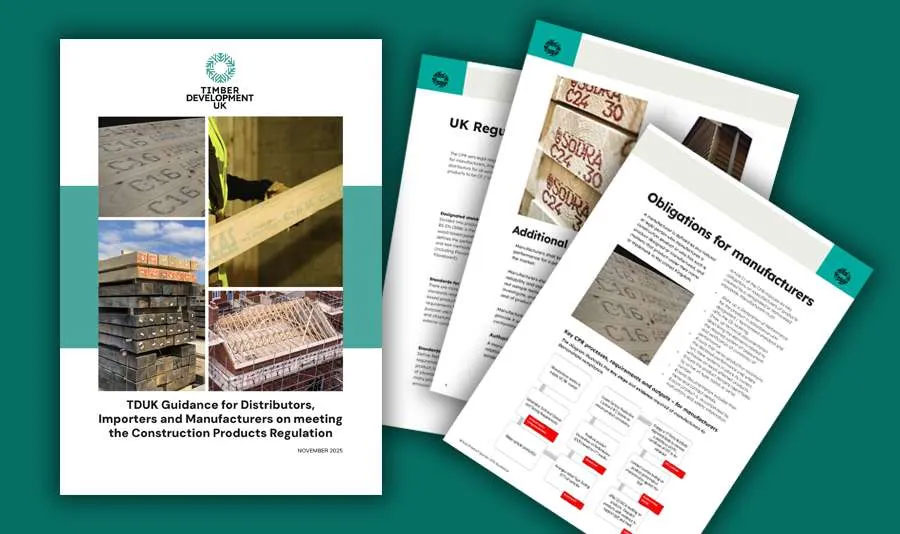
TDUK launches new CPR document for timber sector
TDUK launches new CPR document for timber sector
A new guidance document explaining the requirements of the Construction Products Regulation (CPR) for timber and wood-based products has been released by Timber Development UK (TDUK).
This latest resource for the timber sector is said to clarify how manufacturers, importers and distributors can ensure they remain compliant when placing timber products on the UK construction market.
The Construction Products Regulation, first introduced in 2013, sets legal responsibilities for anyone supplying construction materials covered by a designated or harmonised standard.
The new TDUK guide outlines what these obligations mean for timber businesses and how to meet them, including guidance on CE and UKCA marking, Declarations of Performance, and the specific product standards that apply across the wood sector – from structural timber and panels to glulam, LVL, and timber cladding.
Following the UK’s exit from the European Union, harmonised European standards became UK designated standards. While the rules in the UK have remained largely aligned with those in the European Union, recent updates to the recognition of the CE mark in Great Britain have helped create certainty within the sector.
TDUK’s new publication is intended to help companies understand exactly what remains the same, what has changed, and how to demonstrate compliance through appropriate testing, documentation, and marking.
David Hopkins, Chief Executive of Timber Development UK, said: “This guidance has been written to help manufacturers and suppliers across the timber industry navigate what can often feel like a complex regulatory landscape.
“Compliance with the Construction Products Regulation is not optional – it is a legal requirement that underpins safety, performance and trust in our products. By setting out clear explanations of each responsibility in plain language, this document gives our members the knowledge and confidence they need to continue placing compliant, high-quality timber products on the market.”
The publication, Guidance for Distributors, Importers and Manufacturers on Meeting the Construction Products Regulation, is available to download now from the TDUK website.
For more information about TDUK visit: timberdevelopment.uk
More news

Donaldson Timber Systems Partners with HebHomes

TJN’s Andy Ball’s day out supporting Lignum members